- Behind the Scenes of Project Be Brave’s Japanese Dubbing & Localization Project
- From One Voice to a Team of Japanese Voice Actors
- When Localization Means Changing a Name
- Japanese Dubbing Is More Than Reading the Translation
- A Serious Message, Delivered in an Approachable Way
- A Truly International Collaboration
- Connecting the Japanese and International Teams
- Voice Can Connect People Across Borders
Behind the Scenes of Project Be Brave’s Japanese Dubbing & Localization Project
A puppet doesn’t speak.
But the moment a voice is added, something changes.
Suddenly, the puppet can feel like a person. It can have a personality, a sense of humor, even a story.
That was one of the things I experienced while working on the second Project Be Brave dubbing project.
This time, our international team came together to create a Japanese version of a puppet-based video encouraging women to get mammograms and stay proactive about breast cancer screening.
What began as an English-language project grew into a truly international collaboration—with voices and production teams working across languages and cultures.
And for me, it was a wonderful reminder of just how much a voice can do.
From One Voice to a Team of Japanese Voice Actors
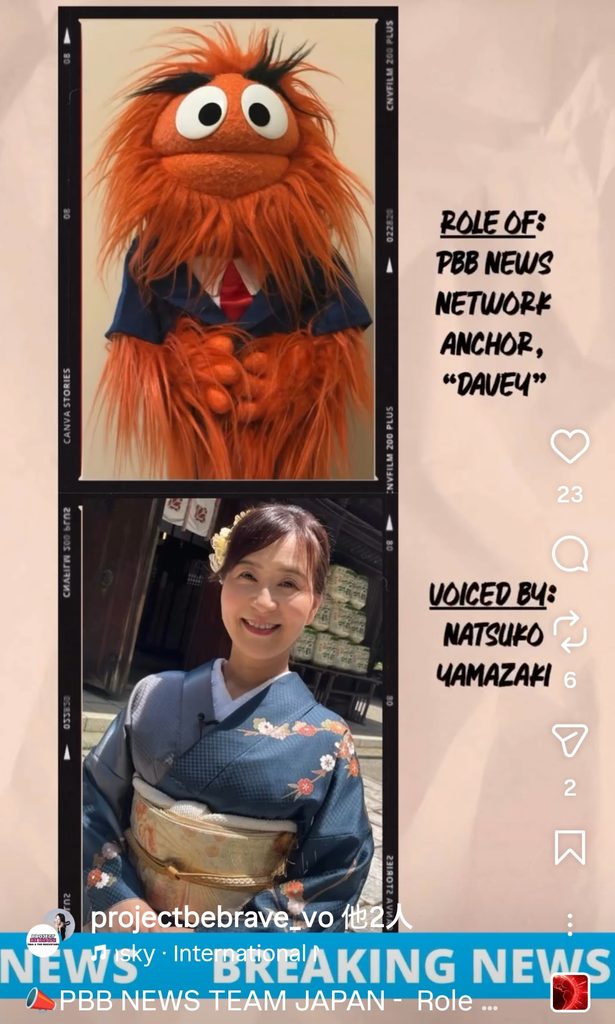
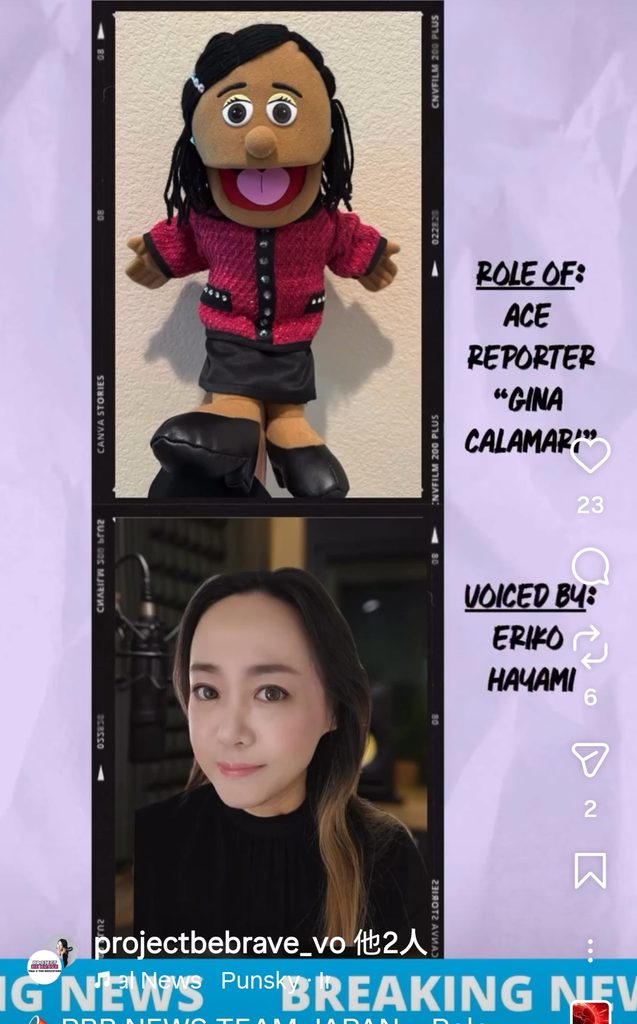
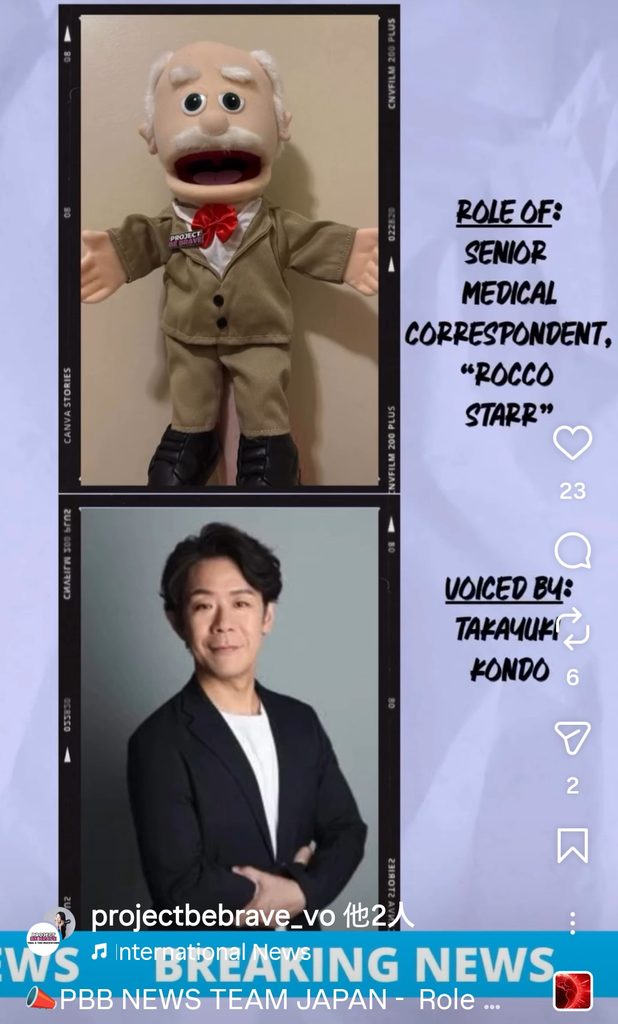
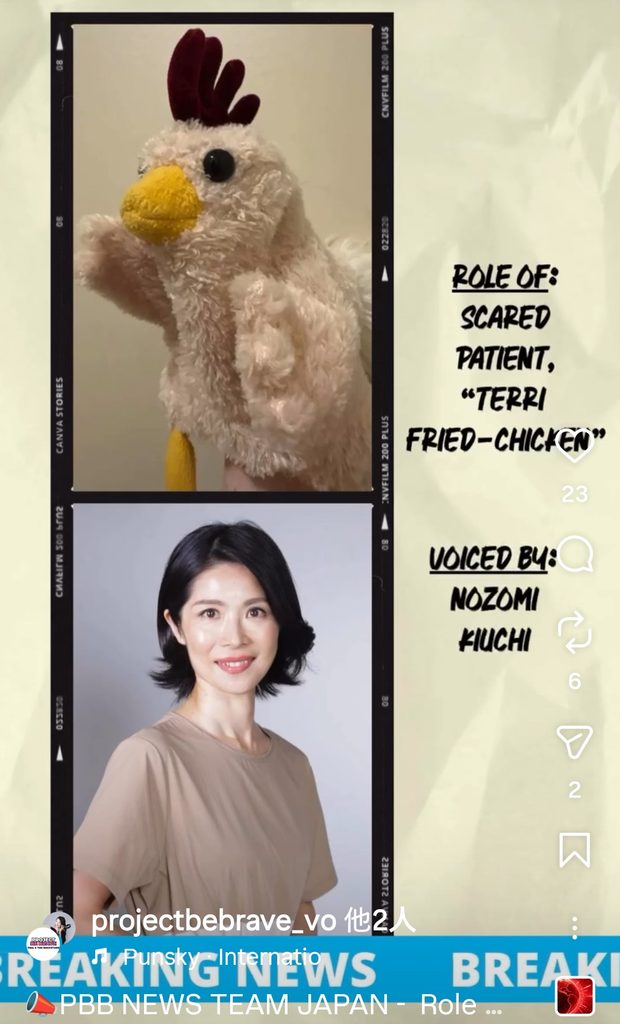
In the first Project Be Brave project, I voiced Davey on my own for the Japanese version.
For this second project, more Japanese voice actors joined the team.
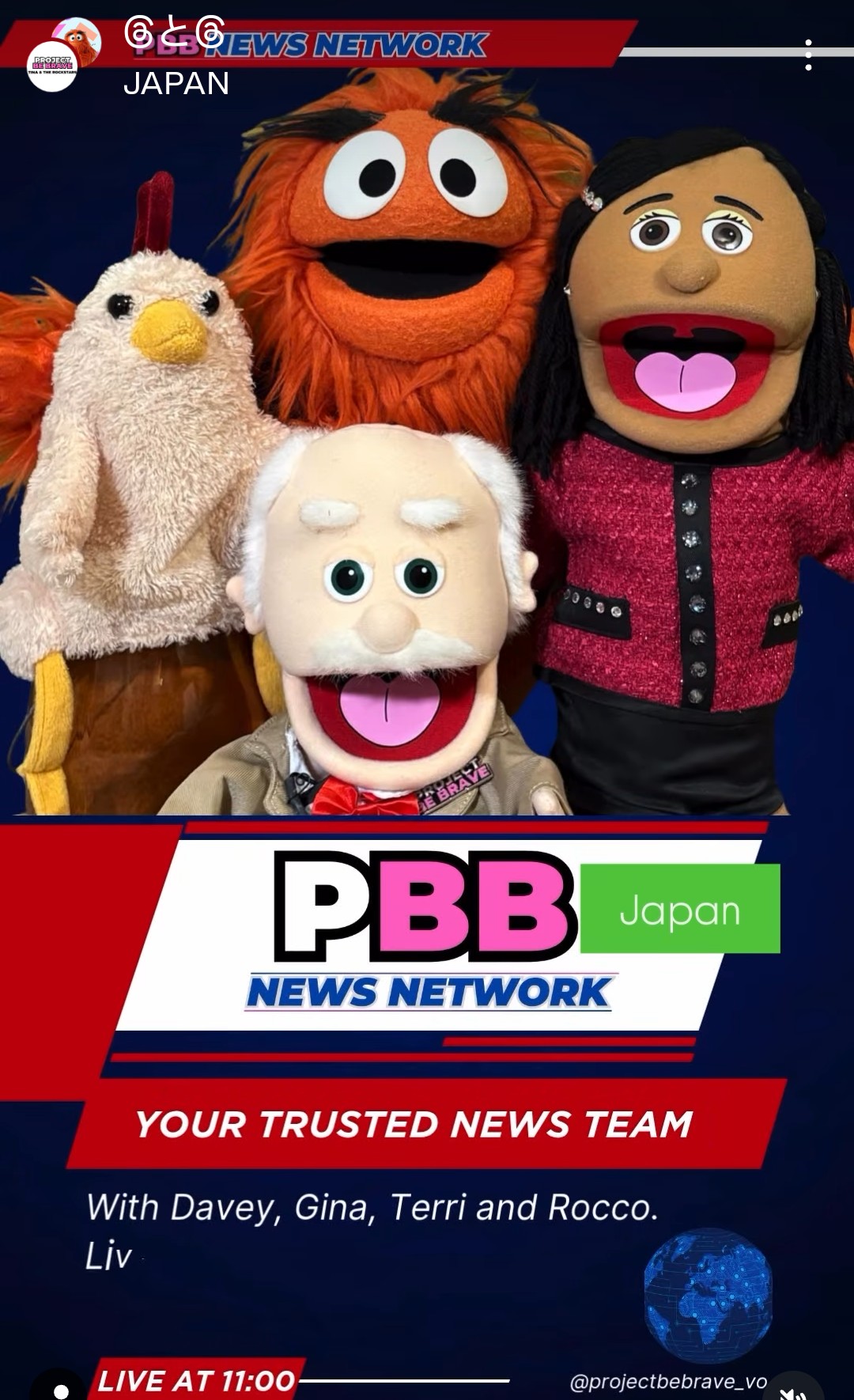
Davey, Gina, Terry, and Rocco each have very different personalities, so the challenge was not simply to translate the words.
We needed to make each character feel alive in Japanese.
The production team encouraged us to really commit to the performances—to go beyond simply “reading” the script and let each puppet have its own personality.
That meant thinking about tone, rhythm, reactions, humor, and the little details that make a character feel like a real person.
When Localization Means Changing a Name
One of my favorite examples from this project is Terry.
His original English name is “Terry Fried Chicken.”
Terry is a chicken who is easily frightened and timid. The combination of “Terry” and “Fried Chicken” creates a playful, humorous name in English.
But translating the name literally into Japanese would not necessarily create the same feeling.
The production team asked us to come up with a Japanese name that would preserve the humor and be easy for Japanese viewers to remember.
We wanted to keep the sound of “Terry,” express his timid personality, and make the name itself funny.
And the result was:
「テリヤキビクビク」
“Teriyaki Bikubiku.”
At first, you might think, What kind of name is that?
But once you hear it, it sticks.
“Teriyaki” gives it a distinctly Japanese flavor, while “bikubiku” expresses the way Terry is constantly nervous and frightened.
The name itself tells you something about the character.
This is what localization can be.
It is not always about translating every word literally.
It is about finding an expression that creates a similar feeling for the audience in another language and culture.
Japanese Dubbing Is More Than Reading the Translation
For this project, the original English script was the starting point.
But the Japanese version needed to sound natural to Japanese viewers while staying true to the characters and the message.
Translation and localization were handled by Nozomi Kiuchi, while the voice actors also considered how the Japanese wording would work in performance.
Sometimes, a phrase that looks perfect on paper does not sound natural when spoken aloud.
A character may need a slightly different expression.
A joke may need to be adapted.
A rhythm may need to change.
These small decisions can make a significant difference in dubbing and character voice work.
For me, this is one of the most interesting parts of Japanese voiceover and localization: finding the point where language, character, culture, and voice come together.
A Serious Message, Delivered in an Approachable Way
The subject of Project Be Brave is serious: the importance of breast cancer screening and mammograms.
At the same time, the puppet format allows the message to be presented in a friendly and approachable way.
That contrast was important.
The characters could be funny and expressive, while the message remained meaningful.
As voice actors, our role was not simply to make the audience laugh.
We wanted the characters to feel familiar and engaging enough that viewers would listen—and hopefully think about the message behind the story.
A Truly International Collaboration
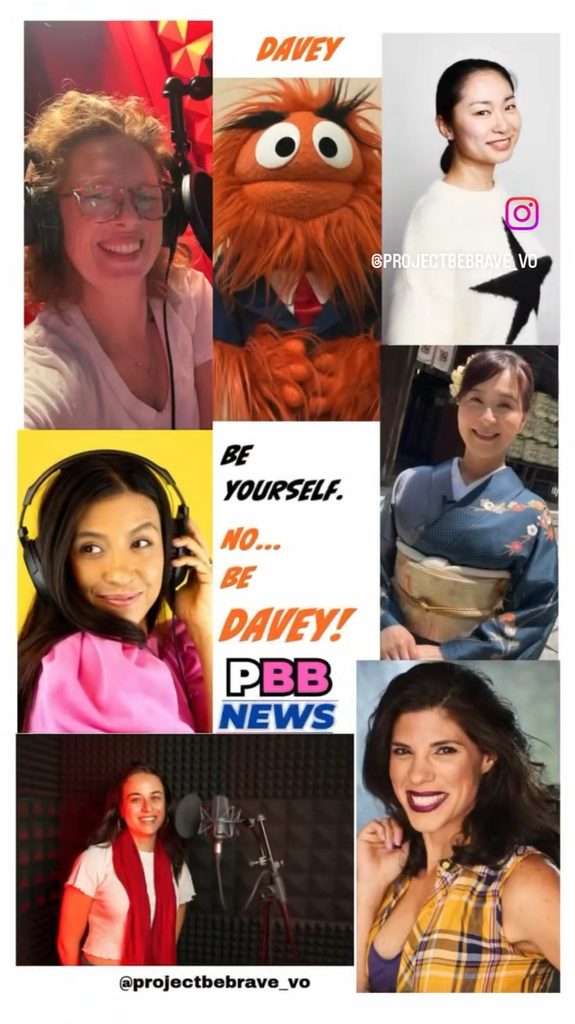
One of the things I find especially exciting about Project Be Brave is how the project continues to cross borders.
The content is expanding across multiple languages, including:
English, Japanese, Chinese, Arabic, Spanish, and Brazilian Portuguese.
Different languages. Different cultures. Different voices.
Yet the goal remains the same: to communicate an important message to more people.
Working with collaborators from different countries has been a wonderful experience for me.
Every time we connect across language and cultural differences, I am reminded that communication is not only about words.
Sometimes, it is a voice.
Sometimes, it is a character.
Sometimes, it is a small change in a name or expression that helps someone on the other side of the world understand the message in a way that feels natural to them.
Connecting the Japanese and International Teams
My role in this project went beyond Japanese voiceover.
As part of the Japan-side production team at I-Company, I also helped connect the Japanese and international teams, including communication, subtitle and on-screen text checks, and coordination on the Japanese version.
Working between languages and production teams gave me another perspective on localization.
A successful Japanese version is not created by translation alone.
It takes communication between people who understand the original intention and people who understand how that intention can naturally reach Japanese audiences.
That bridge is something I value deeply.
Voice Can Connect People Across Borders
This project started with a message created in one language.
It then traveled through different countries, different teams, and different languages.
And somewhere along the way, a puppet named Terry became テリヤキビクビク.
A different name.
A different language.
But the same character—and the same message.
That is the power of localization.
And that is also why I love working with voice.
A voice can carry emotion, personality, culture, and intention across borders.
I am grateful to everyone who has been part of this international collaboration, and I am excited to see where these connections lead next.
Project Be Brave — Multilingual Versions
The Project Be Brave message is reaching audiences in multiple languages.
Japanese
Arabic
Mandarin Chinese
Spanish
Brazilian Portuguese
Project Credits
Project: Project Be Brave
Script & Executive Direction: Tina Kamriani
Japanese Voice Actors: Davey / Natsuko Yamazaki | Gina / Eriko Hayami | Terry / Nozomi Kiuchi | Rocco / Takayuki Kondo
Translation & Localization: Nozomi Kiuchi
Japan-side Production & International Project Liaison: Natsuko Yamazaki / I-Company
Main Editing / Production: Davey Productions — Cara Leighty
Japanese Voiceover, Dubbing & Localization
Bringing a message to Japanese audiences takes more than translating words.
It takes the right voice, the right expression, and an understanding of the culture and people you want to reach.
Through Japanese voiceover, dubbing, character voice, and localization, I help international production teams bring their content naturally to Japanese audiences.
If you are looking for a Japanese voice for your next project, or need support bringing international content to Japan, I would love to hear about your project.
Let’s bring your story to Japan, through voice.
A Voice Becomes Your Brand.